A Coffee Maker “Cup” Isn’t a Mug
Before you figure out how much coffee per cup, figure out which cup you mean. This is the part that trips people up.
The cup markings on a drip coffee maker are often only about 5 to 6 oz each. The exact number varies by brand, so check the manual or measure it once with a measuring cup. That means a “12-cup” maker holds roughly 60 to 72 oz of water. Your mug is probably 8 to 12 oz, and your travel tumbler is bigger than that. So a full 12-cup pot fills about five or six 12 oz mugs, not twelve.
Everything below uses fluid ounces of water, so there’s no confusion about which cup is which.
How Much Coffee Per Cup: The Standard Starting Point
About 2 level tablespoons of ground coffee, roughly 10 g, per 6 oz of water is a standard starting point. That works out to about 1.67 g of coffee per fluid ounce of water, or around 1:18 by weight. That’s the lighter end of the 1:15 to 1:18 range that’s common for drip.
Like it stronger? Go to about 12 g per 6 oz, a little under 2½ tablespoons, which puts you close to 1:15.
A tablespoon is a rough measure. About 5 g per level tablespoon of ground coffee is a common conversion, but it varies with the grind and the roast. Many coffee scoops hold about 2 tablespoons, but check yours. If you have a kitchen scale, weigh it.
Coffee Ratio for a Drip Coffee Maker: Chart by Pot Size
The ranges below cover machines that mark a cup as anywhere from 5 oz to 6 oz, at 10 g per 6 oz of water (about 1.67 g per ounce).
| Pot size | Water (5 to 6 oz per cup) | Ground coffee | Level tablespoons (approx.) |
|---|---|---|---|
| 4-cup | 20 to 24 oz | 33 to 40 g | 6½ to 8 |
| 6-cup | 30 to 36 oz | 50 to 60 g | 10 to 12 |
| 8-cup | 40 to 48 oz | 67 to 80 g | 13½ to 16 |
| 10-cup | 50 to 60 oz | 83 to 100 g | 16½ to 20 |
| 12-cup | 60 to 72 oz | 100 to 120 g | 20 to 24 |
Not filling the pot? Measure by the water you actually pour in, not by the size of the machine. Brewing a single 12 oz mug? That’s 20 g, about 4 level tablespoons. For any other amount or ratio, use the coffee ratio calculator.
Grind, Water and a Clean Machine
Grind medium, about the texture of regular sand. Too fine and the basket can overflow or the pot turns bitter. Too coarse and the water runs through weak. Pre-ground coffee is usually ground with drip machines in mind, so it’s a safe bet here.
Use fresh, cold water. Fill the reservoir fresh for every pot. Water that sat in the tank overnight tastes flat. If your tap water tastes off, the coffee will too, so filtered water is worth it.
Keep the machine clean. Coffee oils build up in the basket and carafe and go stale, and mineral scale builds up inside the machine. Rinse the basket and carafe after every use, and descale on the schedule in your machine’s manual. A dirty machine makes good coffee taste bad, no matter what you put in it.
Seat the filter right. Match the filter to the basket shape and make sure it sits fully open, so water can’t sneak around the grounds.
Don’t Cook It on the Hot Plate
The warming plate keeps heating the coffee after it’s brewed. The longer it sits there, the more it tastes stewed and burnt. Brew it, pour it into an insulated tumbler or a thermal carafe, and switch the plate off. It stays hot a lot longer without cooking.
If half the pot keeps getting dumped, brew less. A smaller fresh pot beats a big scorched one.
Drip Coffee in the Jobsite Trailer
A drip maker in the trailer is the crew’s fuel station. A few habits keep it honest:
- Tape the numbers to the machine. Pot size, how many scoops, which line to fill to. Whoever gets there first shouldn’t have to guess.
- Pre-portion the coffee. Weigh or scoop a few days’ worth of pots into jars at home. The morning pot becomes filter, coffee, water, go.
- Fill the jugs, not the hot plate. As soon as it’s done brewing, pour it into insulated tumblers or a big thermal jug.
- Rinse the carafe at the end of the day. Tomorrow’s pot will thank you.
- Whoever kills the pot makes the next one. You won’t find it in any manual, but it should be there.
Store the coffee like you’d store anything you want to keep working. Air, heat, light and moisture all wear it down, so keep beans or grounds in an airtight container, somewhere cool and dry. A shelf in the trailer beats the dashboard of a truck parked in the sun. Buy what you’ll go through in a few weeks rather than a stockpile that goes stale on the shelf.
Ground or whole bean? For the trailer pot, ground is the easy call: open, scoop, brew. If somebody on the crew owns a grinder, whole bean ground fresh each morning tastes better, and a medium setting is the one to use.
Best Roasts for the Drip Pot
A shared pot has to please a crew with different tastes. These three cover it:
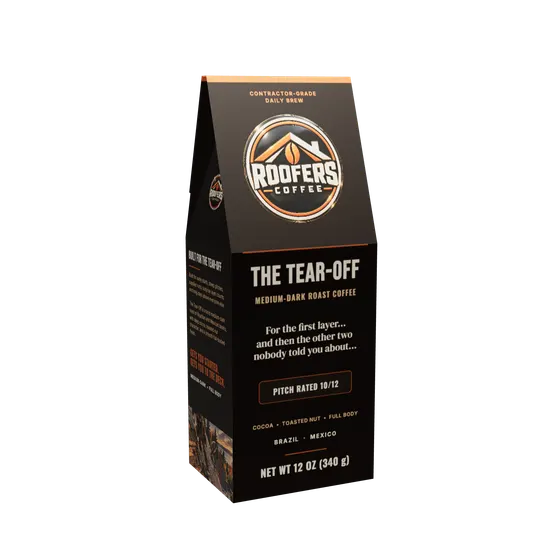
- The Tear-Off: medium-dark, 10/12. Cocoa and toasted nut, full body, smooth enough to drink black. The trailer’s everyday pot.
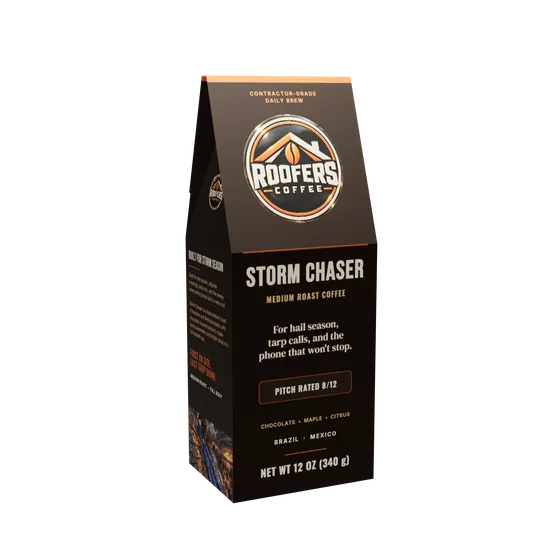
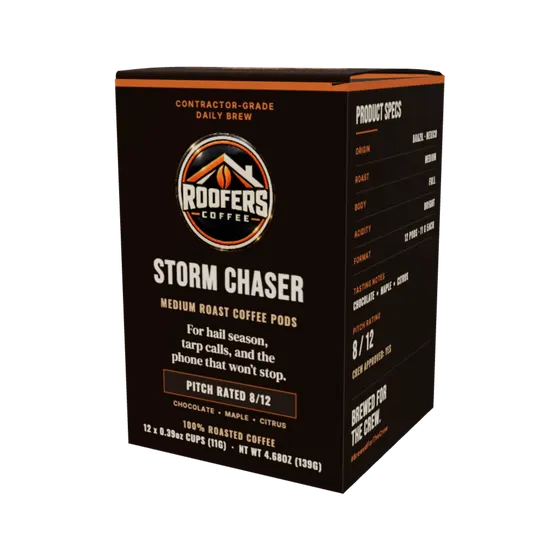
- Storm Chaser: medium, 8/12. Chocolate-covered almond, maple syrup and citrus, bold with a full body. For the long days.
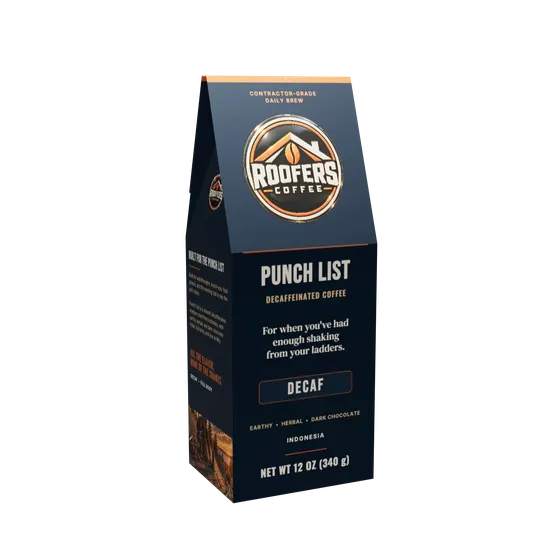
- Punch List (Decaf): medium, 7/12, decaffeinated. Earthy, herbal and dark chocolate with low acidity. The afternoon pot. Decaf still has a trace of caffeine.
Every 12 oz box comes whole bean or ground and is roasted fresh when you order. See the whole lineup on the pitch rating scale.
No Scoop, No Math: Pods
If the math isn’t happening at 6 AM, pods skip it. One pod, 6 to 8 oz of water, and a smaller cup brews bolder. Each pod holds the same coffee as the matching 12 oz box:
- Storm Chaser Pods: medium, 8/12.
- Ridge Cap Pods: dark, 11/12.
- Low Slope Pods: light, 4/12.
More ways to brew, from french press to cold brew, are in the Jobsite Brew Guide.