Coffee and roofing have more in common than you would think. Both have their own language. Both reward getting the basics right. And both go better when somebody explains them straight. That is what the Field Guide is for: plain-English reads for homeowners, new crew members and anyone who wants a better cup before the first ladder goes up.
Start here: the Field Guide articles
Light roast vs dark roast
What roasting actually does to a bean, how flavor, body and acidity change from light to dark, and the caffeine question that starts arguments at the supply house. Short version: roast level changes caffeine very little. The article also matches each roast to a brew method and walks our full lineup up the pitch scale. Read light roast vs dark roast.
Roofing terms, in plain English
A glossary for homeowners and new hands. It covers roof shapes and slope, edges and trim, every layer from the deck up, the spots where water gets tricky, and the words you hear on the job and after a storm, from drip edge and valley to tear-off and punch list. Definitions are general; local code and the manufacturer’s instructions always have the final word. Browse the roofing terms glossary.
How the pitch rating ties it together
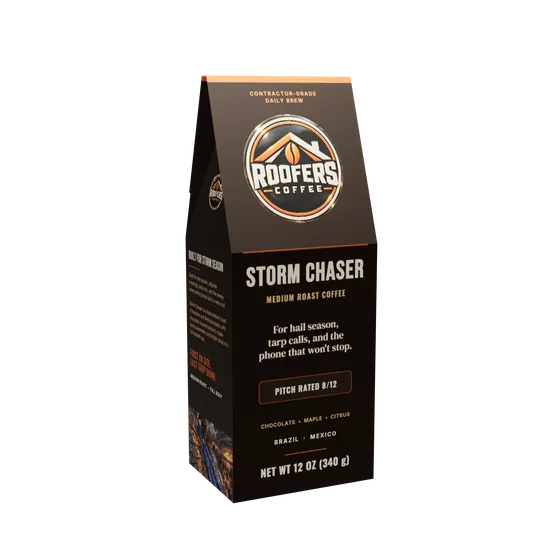
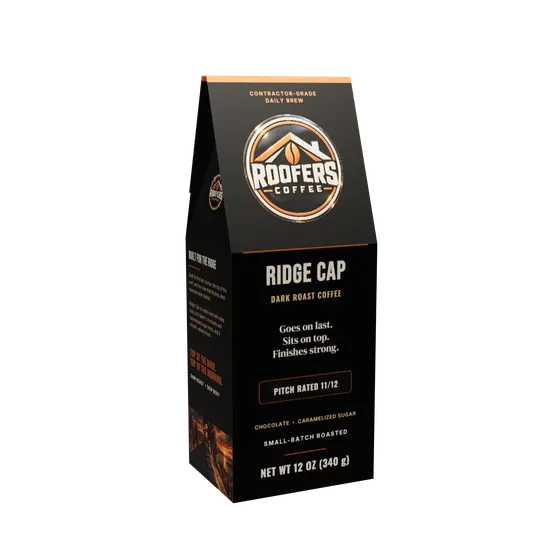
Our coffees are named after roofing terms, and they are rated like roofs too. The pitch rating borrows roof pitch, the rise over a 12-inch run. The higher the pitch, the darker the roast and the bolder the cup. Light starts at 4/12 with Skylight and Low Slope. The darkest, Ridge Cap, sits at 11/12. Everything else has its own spot in between, from the bright 5/12 Starter Strip to the bold 10/12 The Tear-Off.
Want to know what pitch means on a real roof? The roof pitch calculator turns rise and run into pitch, degrees and a multiplier, and the roof pitch chart lists every pitch from 1/12 to 24/12. Both live in the Roofer’s Toolbox.
Brewing better coffee on the jobsite
Good coffee comes down to ratio, grind, water and time. The Jobsite Brew Guide covers four methods that work for a crew: cold brew made the night before, a French press in the trailer, a pour-over at home and a plain drip coffee machine done right. The coffee ratio calculator handles the math for any cup size.
Ready to pour? The full lineup is on our coffee page.