The French Press Ratio: A Starting Point
A french press ratio of 1:12 to 1:16 coffee to water by weight is a common starting point. That’s 1 gram of coffee for every 12 to 16 grams of water. Start at 1:15, right in the working range. Go toward 1:12 if you like it bold and heavy. Go toward 1:16 if you want it lighter.
Weigh both sides if you can. Water makes it easy: 1 gram is 1 milliliter, and a fluid ounce of water weighs about 29.6 g. A scale beats a scoop every time, because a scoop can’t tell a coarse grind from a fine one.
French Press Chart: Grams and Tablespoons by Press Size
Presses are sold in “cups,” and a press cup is small, roughly 4 oz. So a 3-cup press holds about 12 oz and an 8-cup press about 34 oz. Sizes vary by brand, so check yours, and weigh the water you actually pour.
| Press size | Water (approx.) | Coffee at 1:15 | Coffee at 1:12 (bolder) |
|---|---|---|---|
| 3-cup | 12 oz (355 g) | 24 g (about 5 tbsp) | 30 g (about 6 tbsp) |
| 4-cup | 17 oz (503 g) | 34 g (about 7 tbsp) | 42 g (about 8 tbsp) |
| 8-cup | 34 oz (1,005 g) | 67 g (about 13 tbsp) | 84 g (about 17 tbsp) |
| 12-cup | 51 oz (1,508 g) | 101 g (about 20 tbsp) | 126 g (about 25 tbsp) |
The tablespoon figures use about 5 g per level tablespoon of ground coffee, a common rough conversion. It varies with grind size and roast, so treat the spoon numbers as a way to get close, not a way to get exact. For a size that’s not on the chart, the coffee ratio calculator does the math.
Grind Coarse, and Use Water Just Off the Boil
Grind coarse, like breadcrumbs or rough sea salt. A press uses a metal screen, not a paper filter, so fine grounds slip through into your cup and keep extracting there. Coarse grounds also make for an easy plunge. The grinder matters too. A burr grinder cuts the beans to an even size. A blade grinder chops them into a mix of chunks and dust, and the dust ends up as sludge in the bottom of your mug. If a blade grinder is what you’ve got, pulse it in short bursts and shake it between pulses.
Water just off the boil, about 195 to 205°F, is the usual target. No thermometer? Bring the kettle to a boil, take it off the heat and wait about 30 seconds. Water that’s too hot can push the cup bitter. Water that’s too cool leaves it weak and sour.
How to Brew French Press Coffee, Step by Step
- Preheat the press. Swirl some hot water in the carafe and dump it. A cold carafe steals heat from the brew.
- Add the coffee. Give the press a shake to level the grounds.
- Pour and start a 4-minute timer. Pour about half the water, making sure every ground gets wet, then add the rest.
- Stir. A few gentle strokes so there are no dry pockets. A wooden or plastic spoon is easier on a glass carafe.
- Lid on, plunger up. Set the lid on with the plunger pulled all the way up to hold in the heat.
- Break the crust at 4 minutes. The grounds float up and form a crust on top. Take the lid off and give the crust a stir, or push it down with the back of a spoon so the grounds sink. Skim off any foam if you want a cleaner cup.
- Plunge slowly. Steady pressure, about 20 to 30 seconds. If it fights you, the grind is too fine. Don’t force it.
- Decant right away. Pour it all into mugs or an insulated carafe. Coffee left sitting on the grounds keeps extracting and turns bitter, even with the plunger down.
Leave the last half inch in the press. That’s where the silt settles.
Fixing Bitter or Weak French Press Coffee
Change one thing at a time, then taste the difference.
If it’s bitter or harsh:
- Grind coarser.
- Pull the steep back toward 3½ minutes.
- Let the water sit a little longer off the boil.
- Decant as soon as you plunge. Easy to skip, big difference.
If it’s weak or sour:
- Use more coffee. Move from 1:16 toward 1:12.
- Grind a little finer, but not so fine you can’t plunge.
- Give it the full 4 minutes, or stretch it to 5.
- Use hotter water, closer to right off the boil.
If it’s muddy or gritty:
- The grind is too fine or too uneven. Go coarser.
- Plunge slower.
- Leave the bottom of the pot in the pot instead of draining it into your mug.
French Press on the Jobsite
A press is about as rugged as coffee gear gets. No paper filters, and no outlet needed for the brewing part. All it needs is hot water from a kettle or a camp stove. A steel press rides in a truck better than a glass one.
Weigh the coffee into a jar at home. On site it’s three moves: hot water, wait 4 minutes, plunge. Then pour it into insulated tumblers so it’s not sitting on the grounds while you run the first bundles up the ladder. An 8-cup press makes enough for a couple of travel mugs.
Cleanup on site is simple: knock the grounds into a trash bag, rinse the carafe and screen, and pack it up. The homeowner’s flower bed is not your compost pile.
Hot day? The same press makes cold brew overnight. The cold brew guide has the ratio and steep time.
Best Coffee for French Press
The metal screen lets the coffee’s oils through, which is where a press gets its heavy body. Medium and darker roasts lean right into that:
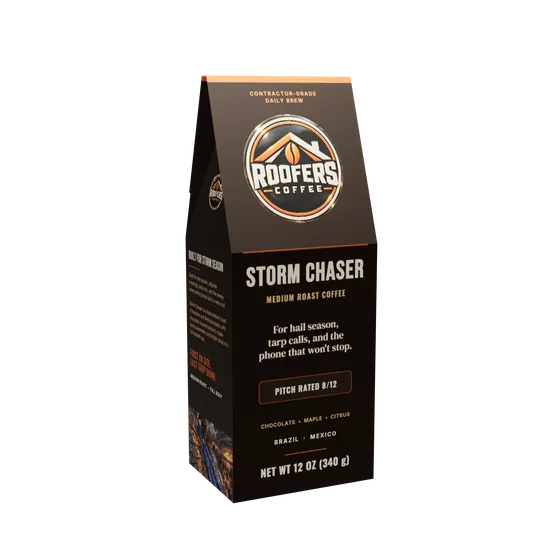
- Storm Chaser: medium, 8/12. Chocolate-covered almond, maple syrup and citrus, bold with a full body.
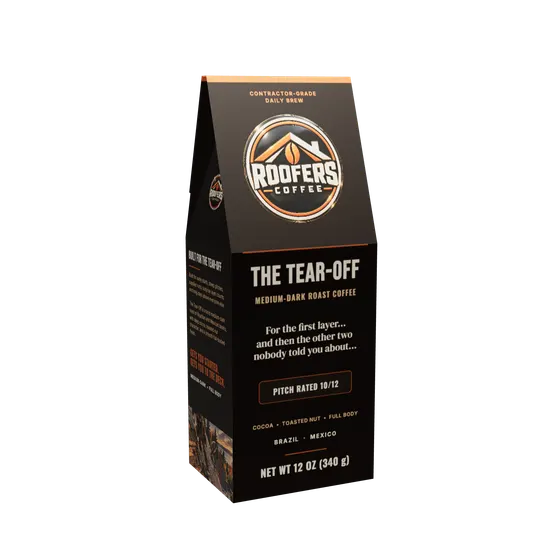
- The Tear-Off: medium-dark, 10/12. Cocoa and toasted nut, full body, smooth enough to drink black.
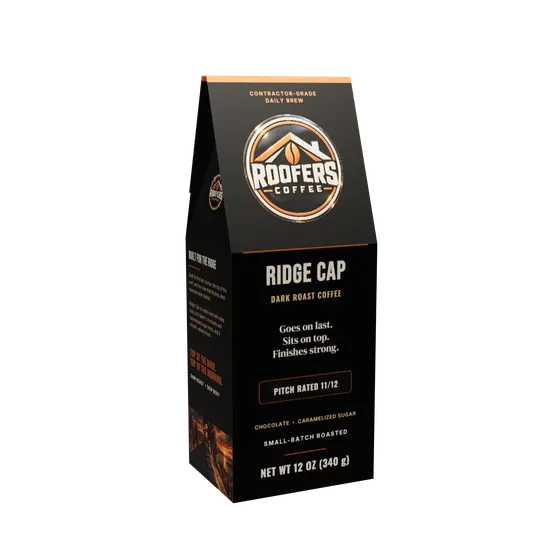
- Ridge Cap: dark, 11/12. Baker’s chocolate and caramelized sugar, with a deep body and a smooth, velvety finish.
Every 12 oz box comes whole bean or ground and is roasted fresh when you order. Whole bean lets you grind coarse right before you brew. See where each one sits on the pitch rating scale, or find another method in the Jobsite Brew Guide.